Northumberland Park, Phase 2: Building the Infrastructure for Community Power
Mitali Sen - 29th June 2026
We are pleased to announce that Phase 2 of the Northumberland Park Knowledge Project launched last month. This blog sets out what the first phase found, why it matters and what we are building next alongside the community.
On the night Beyoncé broke box office records at Tottenham Hotspur Stadium – six shows and over £45m in revenue - the food banks were open. Roads were closed. Buses were rerouted. Residents of Northumberland Park, the estate that sits directly behind the stadium, had to rearrange their lives around an event that gave them almost nothing in return.
This is one of the things residents named clearly during Phase 1 of our community-led research into child poverty in Northumberland Park, delivered in partnership with North London Partnership Consortium Ltd, Place Matters and Roots & Rigour, and generously supported by the Joseph Rowntree Foundation (JRF). It isn’t just that Northumberland Park is deprived, though the data confirms that the ward has one of the highest deprivation rankings in Haringey and child poverty rates here have risen more steeply since 2014 than almost anywhere else. The deeper issue is the relationship between that poverty and the significant wealth that flows through the area without staying in it.
When we mapped child poverty across every Premier League stadium in London, Tottenham Hotspur Stadium stood out as the only one surrounded exclusively by areas that rank among the poorest in the borough. Other London stadia are surrounded by areas no poorer than the rest of their borough. Residents described what economists might call extractive regeneration – investment in a place that doesn’t circulate locally. Match- and concert-goers parachute in and out, spending within the development and ignoring the local businesses, many of which are already shuttered. The area gets disruption while someone else gets a pay day.
Working alongside the community to interpret the data collectively, Phase 1 gave us a sharper picture of poverty and a set of demands for change that are rooted in evidence and shaped by lived experience. Chief among them: a community endowment for Northumberland Park - a long-term mechanism for keeping wealth in the area and giving residents influence over how it’s used. That recommendation was adopted in the Haringey Green Party’s 2026 local election manifesto giving it real political momentum.
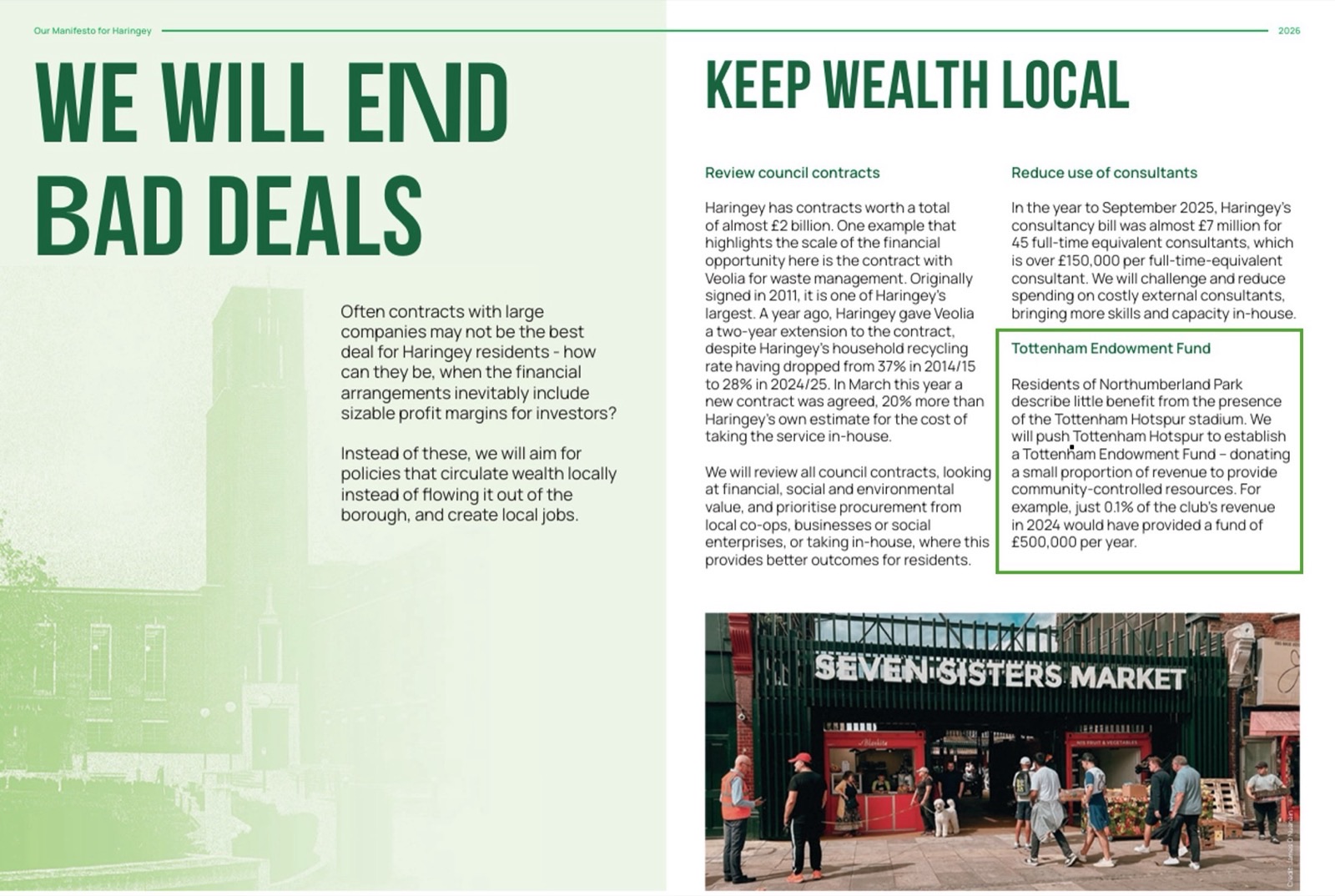
This is what it looks like when communities hold interpretive authority over data about their own lives: the production of compelling knowledge that makes things happen.
Phase 2 of the project will run until the end of this year and builds directly on this, shifting the focus from interpretation to infrastructure. Residents are already using Phase 1 findings to scrutinise planning applications and make the case for local investment. Our task now is to work alongside them to build the tools and structures that make civic participation sustainable so that the community’s capacity to engage with evidence, challenge decisions and shape local policy transcends any single project or funder.
We are excited to continue this collaborative work alongside the local community and our partners North London Partnership Consortium Ltd, Place Matters, Roots & Rigour and JRF, whose combined skills and expertise are essential to its success.
We will share more about the work as Phase 2 develops. In the meantime, you can read the Phase 1 blogs below - and if you are interested in how this approach might work in your area or organisation, we would love to hear from you.
Poverty, Place, and Power in Northumberland Park
From Food Banks to Football Stadia: Where Data Meets Reality in Northumberland Park